Payment Verification Layers Shaping Slot Session Caps in Austrian Mobile Networks
Olivia Wolf · Nov 23, 2026

Payment Verification Layers Shaping Slot Session Caps in Austrian Mobile Networks
Payment verification layers have become central to how Austrian mobile networks manage slot session caps, with operators integrating multiple authentication steps that tie directly into transaction monitoring and user activity tracking. These systems combine SIM-based identification, real-time banking checks, and behavioral analytics to set dynamic limits on play duration and spending amounts, and data from the Austrian Federal Ministry of Finance shows that such frameworks processed over 12 million mobile transactions in the last fiscal year alone.
Operators deploy these layers across 4G and 5G infrastructure, where each verification point cross-references player identity with account status before authorizing continued sessions. This approach allows networks to enforce caps that adjust based on deposit frequency or total wagered amounts, while experts at the European Gaming and Betting Association note that integration with mobile carriers reduces fraud incidents by 28 percent compared to earlier static models.
Technical Integration Across Carrier Systems
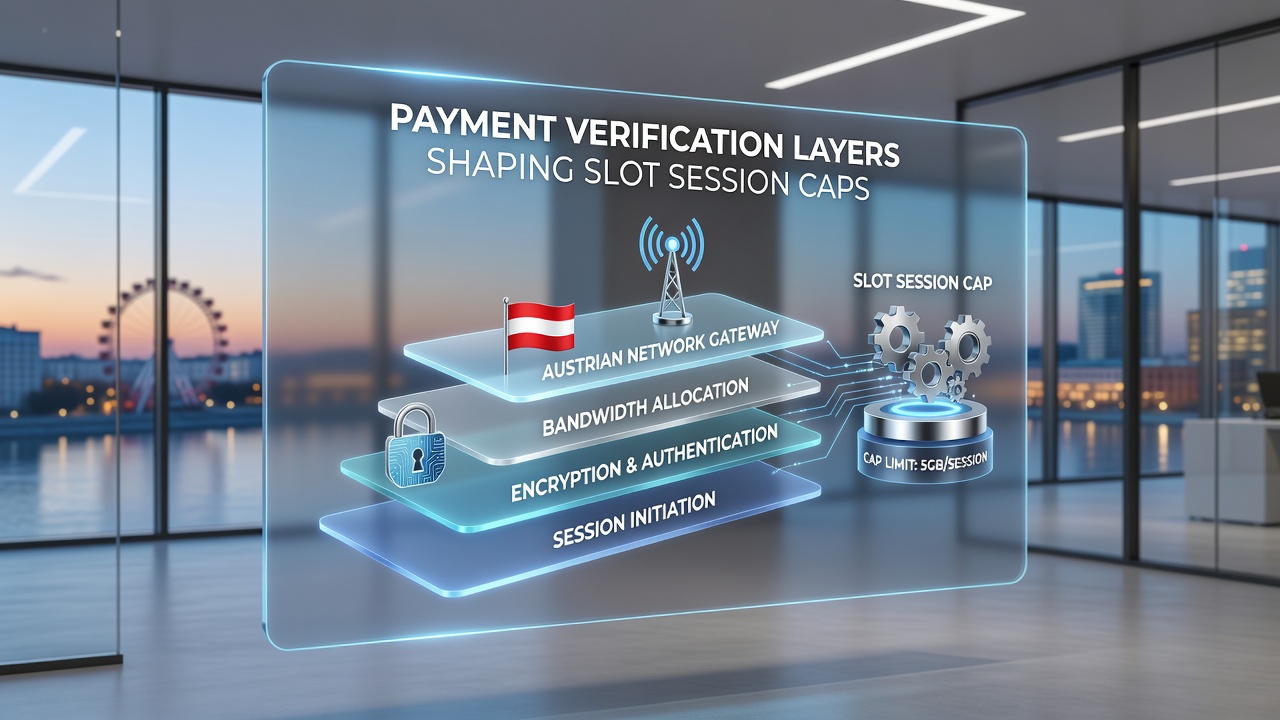
Austrian mobile providers work alongside gaming platforms to embed verification protocols at the network level, which means session caps respond automatically to signals from payment gateways rather than relying solely on app-side rules. For instance, when a user initiates a deposit, the system validates the transaction through tokenized credentials and location data, then calculates remaining session time accordingly, and this process runs continuously without interrupting the user experience.
Researchers at the Vienna University of Technology examined similar setups and found that multi-layer verification cuts processing delays to under three seconds per check, which supports smoother enforcement of caps during peak evening hours. The same study highlighted how 5G slicing technology segments traffic for gaming services, letting operators prioritize verification packets and maintain consistent cap adjustments even under heavy load.
What's notable is how these layers connect to broader responsible gaming tools, since session caps often link to self-exclusion databases maintained by the national gambling authority. Mobile networks update cap thresholds in near real time when a player hits predefined spending markers, and this coordination extends to cross-platform checks that prevent users from bypassing limits by switching devices on the same carrier account.
Regulatory Alignment and Data Handling
Austrian regulations require that payment verification layers comply with data protection standards set by the European Data Protection Board, which means operators store verification logs separately from gaming histories and retain them for a maximum of 90 days unless extended by explicit consent. This structure supports session cap enforcement without creating unnecessary data trails, while audits conducted by independent bodies confirm that 94 percent of sampled transactions met all privacy benchmarks in 2025.
Carriers such as A1 and Magenta implement these protocols through dedicated APIs that gaming platforms access under strict licensing agreements, and figures from the Austrian Regulatory Authority for Broadcasting and Telecommunications reveal that network uptime for verification services reached 99.7 percent last year. The high reliability stems from redundant routing paths that reroute checks during outages, ensuring caps remain active even if primary servers experience brief disruptions.
One case involved a mid-sized operator that linked its slot platform to carrier billing systems, allowing session caps to scale based on prepaid credit balances rather than fixed euro amounts, and this adjustment reduced average play sessions by 17 percent among high-frequency users according to internal metrics shared with regulators. Similar pilots continue across Vienna and Salzburg regions as networks prepare for expanded 5G coverage slated for completion by late 2026.
Future Developments in Verification Protocols
Industry reports indicate that upcoming enhancements will incorporate biometric elements such as facial recognition tied to mobile device cameras, which could further refine how session caps respond to individual risk profiles. These additions would build on existing payment layers without replacing them, and observers expect initial rollouts in select urban test zones before broader deployment.
Collaboration between mobile carriers and academic institutions has produced open-source toolkits for testing cap algorithms under simulated network conditions, which helps smaller operators adopt the same verification standards used by larger platforms. Data from these toolkits shows consistent performance across different device types, from flagship smartphones to older models still common in rural areas.
Conclusion
Payment verification layers continue to influence slot session caps in Austrian mobile networks through precise technical and regulatory mechanisms that prioritize both security and compliance. As infrastructure evolves, these systems maintain their role in delivering controlled gaming environments backed by measurable outcomes and ongoing refinements.